Tires are literally the only point of contact between your RV and the road. Yet they often receive less attention than the engine or the body. This is unjustified, because incorrect tire pressure, overloading, or worn-out tires can lead to higher fuel consumption, poorer handling, and even a blowout. Regular checks not only increase safety but also improve driving comfort and extend the life of the tires.
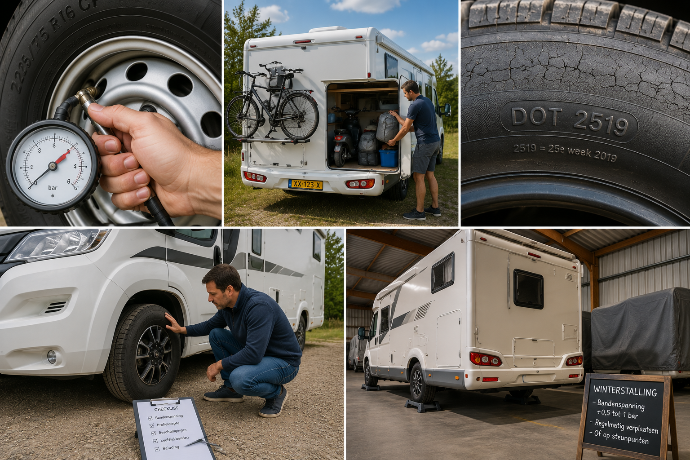
The right tire pressure makes all the difference
Many RV drivers drive with incorrect tire pressure. Both underinflated and overinflated tires pose risks. Underinflation causes the tire to generate excess heat, leads to increased wear, higher fuel consumption, and a greater risk of a blowout. Overinflation, on the other hand, reduces contact with the road, lowers comfort, and can also cause damage.
Therefore, check your tire pressure regularly, and always do so when the tires are cold. You can find the recommended values in the owner’s manual, on a sticker in the door jamb, or by contacting the RV manufacturer. For many RVs, the pressure ranges between 4 and 5.5 bar, depending on the weight and type of tire.
Pay attention to the load
Overloading is one of the main causes of tire problems in RVs. The rear axle, in particular, often has to bear a lot of weight from bicycles, luggage, scooters, or a full garage. This can cause tires to heat up and wear out more quickly. Therefore, be sure to check not only the total weight of the RV but also the axle loads. Proper weight distribution also contributes to more stable handling and greater comfort on the road.
When are tires too old?
Many RV owners focus primarily on the tread depth, but a tire’s age is at least as important. Even when there is still sufficient tread depth, the rubber ages due to sunlight, temperature fluctuations, and prolonged periods of inactivity. After six years, an annual inspection is recommended. Many experts recommend replacing tires after ten years at the latest, regardless of the condition of the tread. Check regularly for dry cracks, deformations, and other visible damage. These can indicate that the tire structure is aging.
Here's how to reduce the risk of a blowout
A tire blowout rarely occurs without warning. It is often preceded by a combination of factors: low tire pressure, overloading, high speeds, damage, or worn-out tires. By inspecting your tires regularly, you can significantly reduce the risk.
Before every long trip, check the following:
- The tire pressure of all tires, including the spare tire.
- Tread depth.
- Any damage to the tire and rim.
- The age of the tires.
- Loading the RV.
Don't forget about winter storage
Tires also require attention during winter storage. Prolonged inactivity can cause deformation. That’s why experts recommend increasing the tire pressure by 0.5 to 1 bar during winter storage, without exceeding the maximum allowed pressure. If possible, move the RV occasionally or place it on supports to reduce the load on the tires.
Conclusion?
Good RV tires are much more than just a legal requirement. They play a key role in determining the safety, ride comfort, and fuel economy of your RV. So be sure to check the tire pressure regularly, avoid overloading the vehicle, and keep an eye on the age of the tires. A quick 15-minute check before departure can prevent a lot of problems on the road.